



- check the fuse #18 in the fuse box that is responsible for the pump. It should be in good condition;
- jack up the rear of the car and place it on supports;
- ask an assistant to turn on the ignition. The fuel pump should turn on, which should be accompanied by a characteristic sound. If the pump works, then find the reason why fuel is not supplied;
- place a rag over the end of the fuel line connection and carefully remove the hose. Fuel should spray out, indicating that the fuel system is under pressure. If so, immediately reattach the hose;
- if this does not happen, ask an assistant to turn the engine with the starter. In this case, fuel should spray out of the removed hose;
- if this does not happen, then do the following:
- turn off the ignition;
- remove the mat on the right side under the second row of seats, unscrew the mounting bolts and remove the electric fuel pump and fuel level sensor hatch;
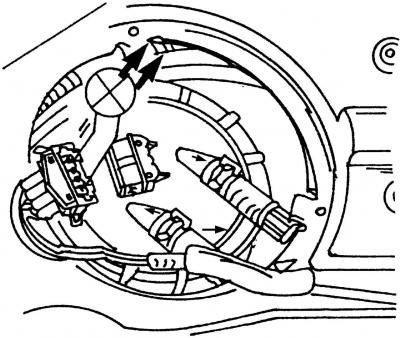
Fig. 205. View of the inside of the fuel level sensor and fuel pump connector. Connect a voltmeter or a control diode lamp to the two outer contacts
- disconnect the fuel level sensor and fuel pump connector; connect a voltmeter or a semiconductor diode test lamp to the two external terminals (Fig. 205);
- turn on the ignition. The voltmeter should show the approximate voltage of the battery. If there is no voltage, then determine the location of the wire break using the electrical diagram and fix it;
- if the voltmeter shows battery voltage, then remove the fuel level sensor and check whether the electrical wires between the flange and the fuel pump are connected and have good contact;
- if there is no break, replace the fuel pump;
- install a new fuel pump and fuel level sensor, connect the electrical wires.
Note: Before changing the pump, the pump relay should be checked at a service station.
Visitor comments