



2. Wheel alignment is determined by four factors:
Wheel alignment
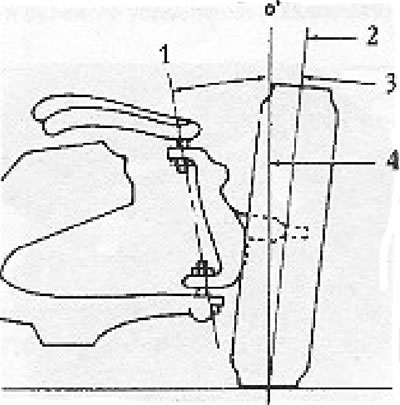
Figure 11.47. Steering axis deviation and wheel camber (independent suspension is shown) (Section 30): 1 - Steering axis deviation; 2 - Center line of the tire; 3 - Positive steering angle; 4 - True vertical.
It is the angle at which the front wheels deviate from the vertical when viewed from the front or rear of the vehicle. Positive camber angle (in degrees) it is considered that the upper part of the wheels is tilted outward from the vertical.
Steering axis tilt angle
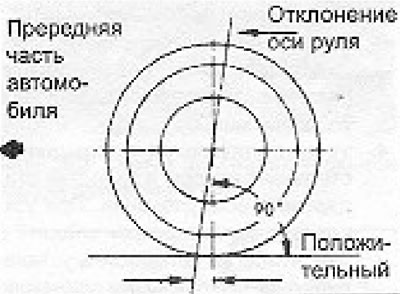
Figure 11.46. Rudder tilt axis diagram (Section 30).
This is the angle between the steering wheel axis and a vertical line when viewed from each side of the car. A positive axle tilt angle is considered to be one in which the top of the axle is tilted towards the rear of the vehicle.
Steering axis deviation
This is the angle between the vertical and an imaginary line drawn between the upper and lower ball joints of the front suspension, or the centers of the main studs.
Wheel alignment
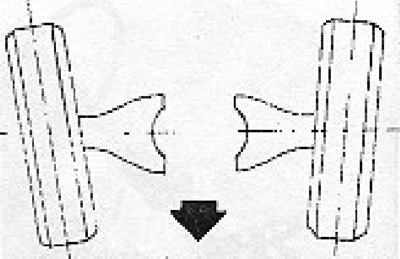
Figure 11.45. Front wheel installation diagram. The arrow points to the front of the vehicle (Section 30).
This is the difference by which the distance between the front inner edges of the wheel rims differs from the distance between the rear inner edges. If the distance between the front edges is less than the distance between the rear edges, then the wheels are converging. If the distance between the front inner edges is greater than the distance between the rear edges, the wheels will diverge.
3. Due to the need to use precise measuring instruments to measure small steering angles and suspension settings, it is recommended that camber and steering axis adjustments be performed at a service station with the appropriate equipment.
The original can be viewed on the portal (VWMANUAL)
4. However, for informational purposes, the methods for adjusting and setting these angles are described in the following two Sections.
Visitor comments