



Fuel tank of vehicles with gasoline engines
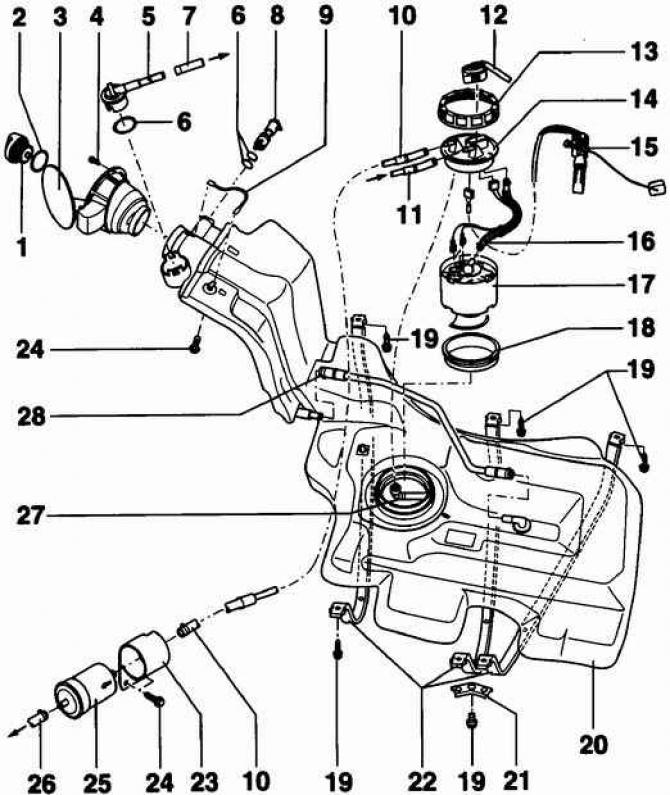
- 1 - cork;
- 2 - sealing ring. Replace the O-ring if damaged.
- 3 - fuel filler cap;
- 4 - bolt;
- 5 - valve. When removing the valve, remove it from the filling port by pulling upwards. When installing the valve in a vertical position, the valve is open, and when it is turned at an angle of 45°, the valve must be closed;
- 6 - sealing ring. If there is damage, replace the O-ring;
- 7 - ventilation hose. The black hose is attached to the side of the fuel tank and goes to the charcoal canister;
- 8 - ventilation valve. When removing, remove the valve from the filling port. Remove the fuel filler cap before installing the valve;
- 9 - wire connected to the mass of the car;
- 10 - black pressure pipe. The pressure pipeline supplies fuel to the fuel filter;
- 11 - blue return pipeline. The return pipeline comes from the engine;
- 12 - four-pin electrical connector. The wires of the fuel level sensor and the fuel pump are connected to the electrical connector;
- 13 - flange nut 60 Nm;
- 14 - flange. When installing the flange, the mark on the flange must align with the mark on the fuel tank;
- 15 - fuel level sensor;
- 16 - fuel supply pipeline;
- 17 - fuel pump. The replacement of the fuel pump must be carried out together with the flange and the fuel supply pipeline;
- 18 - sealing ring. If damaged, use a new O-ring. Before installing the O-ring, soak it in gasoline;
- 19 - bolts 25 Nm;
- 20 - fuel tank;
- 21 - mounting plate;
- 22 - tapes for fixing the fuel tank. Tapes for fastening have different lengths. The hole in the tape is located on the front side of the fuel tank;
- 23 - fuel filter holder;
- 24 - bolt 10 Nm;
- 25 - fuel filter. The arrow on the fuel filter housing indicates the direction of fuel flow;
- 26 - black pressure pipe. The pipeline goes to the fuel line;
- 27 - blue fuel return pipeline;
- 28 - ventilation hose
The fuel system of a car consists of a fuel tank, pipelines, a fuel filter, a fuel pump and a fuel injection system.
The fuel tank, made of plastic, is located under the bottom at the rear of the car. The fuel tank is vented through a closed air removal system. When venting the fuel tank, fuel vapors are captured by the charcoal canister.
Warning: Gasoline is extremely flammable and explosive, so care must be taken when working on any part of the fuel system.
Warning: Work on the fuel system must be carried out in a well-ventilated area, for which all windows and doors can be opened to create a draft.
Warning: When working on the fuel system, do not use open flames, electric welding, or tools that may generate sparks. Make sure there is a charged fire extinguisher in the immediate vicinity of the workplace.
Warning: Use goggles to protect your eyes from getting fuel in them. If fuel comes into contact with skin, wash the area with plenty of water.
Warning: Container containing fuel contains fuel vapors and is potentially explosive.
Warning: Maintain cleanliness when working on the fuel system, as dirt entering the fuel system passages can block them, preventing the engine from operating normally.
Warning: Front wheel drive vehicles with diesel engines do not have a fuel pump in the fuel tank. All-wheel drive vehicles with diesel engines have a fuel pump installed in the fuel tank.
Before removing the fuel tank, pump out the fuel from the tank.
Remove the fuel tank from under the car. Use a jack to support the fuel tank.
Even in an empty fuel tank, there are fuel vapors that are explosive, so be careful.
After installing the fuel tank, start the engine and check the fuel system for leaks.
Visitor comments