



Removal
1. Drain the coolant from the cooling system.
2. Remove the upper radiator mount.
3. If your vehicle has an additional electric radiator fan, disconnect the electrical connector from the radiator fan temperature sensor.
4. Disconnect the electrical connector from the radiator fan motor.
5. Remove the radiator fan motor wiring from the mounting brackets.
6. Disconnect the upper and lower coolant hoses from the radiator.
Cars with automatic transmission
Location of mounting points for power steering oil heat exchanger
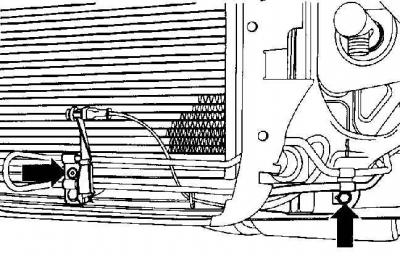
1. Before disconnecting the pipelines, clean the couplings from dirt.
2. Disconnect the automatic transmission oil supply lines from the radiator. Close the ends of the lines with suitable plugs and wipe up any spilled oil with a rag.
3. Unscrew the power steering oil heat exchanger, which is located at the bottom of the radiator (see Fig. Location of mounting points of the power steering oil heat exchanger). Do not disconnect the pipes from the heat exchangers.
Cars with air conditioning
Warning: Do not disconnect the air conditioning hoses. Also, do not stretch or twist the air conditioning hoses.
1. Unscrew the fasteners securing the air conditioning system pipes.
2. Unscrew the condenser from the radiator and, without stretching the hoses, move it forward and secure it in this position.
3. Release the upper radiator mounting clip.
4. Remove the lower part of the radiator from the rubber mounts.
5. Tilt the radiator forward and remove it along with the electric radiator fan.
View the original on this portal: VWMANUAL.ru
Examination
1. If the radiator was removed due to reduced throughput, flush it with a stream of water in both directions. Blow the radiator out with compressed air from the outside.
If the radiator is leaking, do not try to weld or solder the leak, as this will damage the plastic parts of the radiator.
Minor radiator leaks can be repaired using radiator sealant.
2. Check the condition of the lower radiator rubber mounts and replace them if necessary.
Installation
1. Check the condition and, if necessary, replace the rubber cushions of the lower radiator mount.
2. Install the radiator on top along with the electric radiator fan.
3. Secure the top of the radiator with the clamp.
4. When connecting the coolant hoses to the radiator, use new sealing rings. Connect the coolant hoses to the radiator and secure the couplings with the retaining clips.
Cars with air conditioning
1. Attach the capacitor to the radiator.
2. Secure the air conditioning system pipes with clamps.
Cars with automatic transmission
1. Attach the automatic transmission oil lines to the radiator with new O-rings. Lubricate the O-rings with automatic transmission fluid before installation.
2. Check the automatic transmission fluid level and top it up if necessary.
3. Connect the electrical connectors to the radiator fan motor and temperature sensor. Secure the radiator fan motor wiring with clamps.
4. Fill the cooling system with coolant and bleed air from it.
Warning: When installing a new radiator, it is necessary to add fresh coolant.
5. Start the engine and check the cooling system for leaks.
6. Check and, if necessary, adjust the headlights.
Visitor comments