



Oil circulation diagram
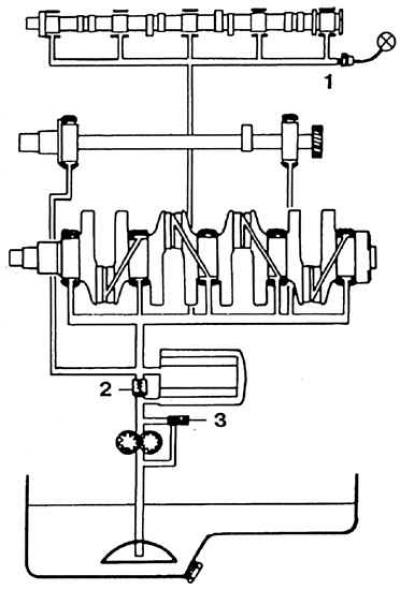
1. Oil pressure sensor
2. Bypass valve (opens when the oil filter is clogged)
3. Oil overpressure valve (opens at too high pressure)
The pump takes engine oil from the oil pan through the intake screen and pumps it into the main oil filter. There is an overpressure valve on the discharge side of the oil pump (oil pressure control valve). When the oil pressure is too high, the valve opens and some of the oil drains into the oil pan.
Through the central axis of the filter element, the filtered oil enters the main pipeline. If the oil filter is clogged, the bypass valve directs the uncleaned oil directly into the main pipeline. In the oil filter branch pipe there is a check valve that prevents the idle operation of the oil channels and hydraulic plate tappets.
The main pipeline branches off into channels for lubricating the crankshaft main bearings. Oil flows through inclined holes in the crankshaft to the connecting rod bearings, and from there it splashes and gets onto the piston pins and cylinders.
At the same time, oil is supplied through vertical pipelines to the cylinder head and provides lubrication to the camshaft main bearings and plate tappets.
Visitor comments