
English Русский
Български
Беларускі
Український
Српски
Hrvatski
Română
Polski
Slovenský
Magyar
  |  Articles  |  Sitemap  |  Contacts  |    |
Car maintenance Ford Car maintenance Hyundai Car maintenance Chevrolet Car maintenance BMW Car maintenance Audi Car maintenance Opel Car maintenance AvtoVAZ
VWmanual.ru


Main   Passat   Golf   Polo   Touareg   Tiguan   Sharan   Transporter   Others  
Passat B2 (1981-1988) Passat B3 (1988-1993) Passat B4 (1988-1996) Passat B5 (1996-2005) Passat B6 (2005-2010)

Removal and installation fuel injectors (VW Passat B5)

  • Main
  • Passat
  • Passat B5
  • Power unit
  • Fuel system (diesel)
  • Removal and installation fuel injectors
            0


Contents: Removal ↓ Installation ↓

Heat-protective sealing ring
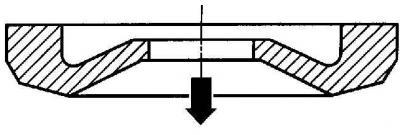


Heat-protective sealing ring


Arrow points to the cylinder head.

Warning: When testing the fuel injectors, never place your hands or any part of your body under the jet of fuel coming out of the injector. Fuel comes out of the injector under high pressure and can penetrate your skin. It is recommended that you have a professional perform the pressure testing of your injectors.


To determine a faulty injector, you need to make sure that the engine is in good condition and the compression level is the same in all cylinders.

Start the engine and warm it up to normal operating temperature.

Loosen the fuel line nipple nut on the injector being tested. Note whether the engine speed has changed.

If the fuel injector is in good condition, there will be a clear decrease in engine speed, accompanied by uneven operation. If the injector being tested is faulty, the change in engine speed will be insignificant and the extraneous knocking noise will disappear, if it was present before.

The following deviations in engine operation indicate the presence of a faulty fuel injector:


  • cylinder misfires;
  • knocking in one or more cylinders;
  • engine overheating;
  • reduction of engine power;
  • thick black smoke comes out of the exhaust pipe;
  • increased fuel consumption;
  • blue smoke when starting a cold engine.

Removal


Warning: Keep the area clean when working with fuel injectors.


1. Clean the area around the fuel injectors and fuel line union nuts.
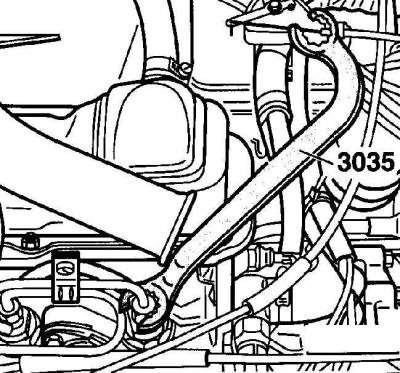
1. Clean the area around the fuel injectors and fuel line union nuts.


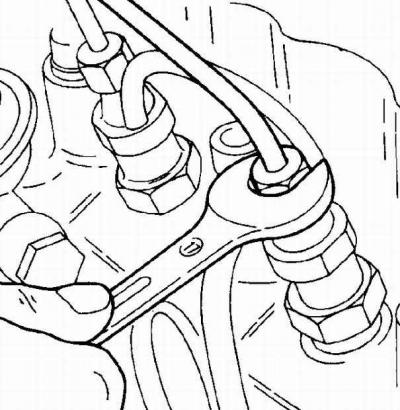
2. Unscrew the union nuts and remove the high pressure fuel lines as a set.

3. Unscrew the fuel injector holders and remove the fuel injectors from the engine.

4. Remove the heat-protective sealing ring.

Installation


1. When installing the fuel injectors, a new heat-protective sealing ring must be used. The ring must be installed with the conical side facing upwards, see Fig. Heat-protective sealing ring.

2. Install the fuel injectors.

3. Install the fuel injector holder, making sure the bracket is positioned correctly on the support
3. Install the fuel injector holder, making sure the bracket is positioned correctly on the support


[The original text is available on the website www.VWmanual.ru]

4. Install the high pressure fuel lines and tighten the union nuts to a torque of 25 Nm.

This article is available at russian, bulgarian, belarusian, ukrainian, serbian, croatian, romanian, polish, slovak, hungarian
The text has been checked: Tarasov Ivan

Share information:

Previous articles
Fuel heating system
Removal and installation glow plugs
Checking glow plugs
Checking the diesel engine preheating system
Diesel fuel system device
Technical data of diesel engine control systems
Next articles
Main faults of the engine management system


Similar articles from other manuals for VW cars:
Fuel injectors Golf 2 (1984-1993, petrol)
Intake manifold/fuel manifold/valve injectors Polo 4 (2001-2009)
Fuel tank filler flap Touareg 1 (2002-2006)
Relieving pressure in the high pressure area of the fuel system Tiguan 1 (2007-2015)
Removal and installation of fuel injectors Sharan 1 (1995-2000)
Draining water from the fuel filter Transporter T4 (1990-2003)
Fuel manifold parts with injectors Caddy 3 (2003-2010)
Link to this page in different formats


Visitor comments


No comments yet


How much will 12 + 25 =


Passat B6 
  • General information
  • User manual
  • Maintenance
  • Petrol engine 1.6L
  • Engine repair
  • Cooling and lubrication system
  • Fuel injection system
  • Petrol engine 2.0L
  • Engine repair
  • Lubrication system
  • Cooling system
  • Fuel and exhaust systems
  • Diesel engine 2.0L
  • Engine repair
  • Cooling and lubrication system
  • Fuel and exhaust systems
  • Transmission
  • Clutch
  • Mechanical gearbox
  • Automatic gearbox
  • Drive shafts
  • Chassis
  • Wheels and tires
  • Car suspension
  • Steering
  • Brake system
  • Body
  • Exterior (external elements)
  • Electrical equipment
  • Power devices
  • Lighting and appliances
  • Electrical circuits
Passat B5 
  • General information
  • User manual
  • Weekly checks
  • Maintenance
  • Power unit
  • Engine repair
  • Cooling system
  • Fuel system (petrol)
  • Fuel system (diesel)
  • Engine management
  • Exhaust system
  • Transmission
  • Clutch
  • Car gearbox
  • Drive shafts
  • Chassis
  • Car suspension
  • Wheels and tires
  • Steering
  • Brake system
  • Body
  • Exterior (external elements)
  • Interior (internal elements)
  • Doors and covers
  • Ventilation and heating
  • Electrical equipment
  • Power devices
  • Lighting and appliances
  • Electrical circuits
Passat B4 
  • General information
  • User manual
  • Maintenance
  • Technical data
  • 8-valve engine
  • Engine repair
  • Cooling and lubrication system
  • Supply system
  • Ignition system
  • Fuel injection «Mono-Jetronic»
  • Control system «Mono-Motronic»
  • Control system «Digifant»
  • Control system «Simos»
  • 16-valve engine
  • Engine repair
  • Cooling and lubrication system
  • Fuel injection «K-Jetronic»
  • Control system «KE-Motronic»
  • Control system «Digifant»
  • Diesel engine
  • Engine repair
  • Cooling and lubrication system
  • Power and control system
  • Turbocharging system
  • Digital control system
  • Transmission
  • Clutch
  • Manual gearbox
  • Hydromechanical gearbox
  • Front wheel drive
  • Chassis
  • Car suspension
  • Steering
  • Brake system
  • Body
  • Body elements
  • Electrical equipment
  • Power devices
  • Lighting and appliances
  • Electrical circuits
Passat B3 
  • General information
  • User manual
  • Driving Tips
  • Maintenance instructions
  • Technical data
  • Power unit
  • Engine repair
  • Ignition system
  • Lubrication system
  • Cooling system
  • Supply system
  • Petrol injection system
  • Diesel engine
  • Exhaust system
  • Transmission
  • Clutch
  • Car gearbox
  • Chassis
  • Suspension
  • Steering
  • Brake system
  • Wheels and tires
  • Body
  • Exterior
  • Interior
  • Heating system
  • Electrical equipment
  • Power devices
  • Lighting system
  • Equipment and devices
  • Wiper system
  • Electrical circuits
Passat B2 
  • General information
  • Introduction to instructions
  • User manual
  • Power unit
  • Engines 4-cylinder FZ
  • Engines 4-cylinder
  • Engines 5-cylinder
  • Transmission
  • Clutch
  • Four-speed gearbox
  • Five-speed gearbox
  • Hydromechanical gearbox
  • Front wheel drive
  • Chassis
  • Front suspension
  • Rear suspension
  • Steering
  • Brake system
  • Body
  • Body elements
  • Electrical equipment
  • Equipment and devices
  • Electrical circuits
VWmanual.ru © 2016-2026 | Mobile version | News and articles | Sitemap: EN BG BY UA RS HR RO PL SK HU | Write message | Site search
Passat B2 • Passat B3 • Passat B4 • Passat B5 • Passat B6 • Golf 1, diesel • Golf 1, petrol • Golf 2, petrol • Golf 2 • Golf 3 • Golf 4 • Golf 5 • Polo 3 • Polo 4 • Touareg 1 • Tiguan 1 • Sharan 1 • Transporter T3 • Transporter T4 • LT 28 • LT 2D • Beetle • Caddy 3 •
Our website uses cookies to ensure functionality and convenience.