



Contents: Temperature regulation ↓ Rear window heating ↓ Air recirculation mode in the cabin ↓ Heating and cooling the air in the…↓
Using the temperature controller (1) (see figure 24), the air flow distribution regulator (5) and the fan speed switch (6) can be used to set the temperature of the supplied air, the location of its supply and the intensity of the air supply.
The activation of the rear window heating and recirculation mode is indicated by yellow indicator lights located in the corresponding keys (2) with the symbol
 and (4) with the symbol
  .
.
Temperature regulation
The regulator (7) is a stepless regulator.
The fastest heating of the interior is achieved when the engine warms up to operating temperature.
Rear window heating
After approximately 20 minutes of being switched on, the rear window heating automatically switches off. You can also turn off the heating by pressing the button (2) again.
Sofort heating key (5) with symbol
 available in vehicles equipped with a parking heater.
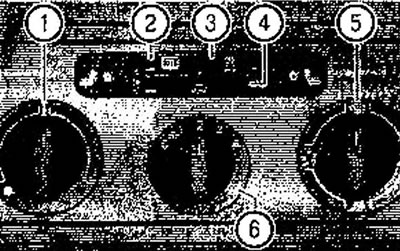
Figure 24. Heating controls located on the front panel:
1. Supply air temperature regulator
2. Rear window heating switch
3. Parking heater switch
4. Interior air recirculation mode switch
5. Air supply distribution regulator
6. Heater fan speed controller
Air recirculation mode in the cabin
In air circulation mode, the access of outside air to the heater is blocked. In this case, air enters the heater from the passenger compartment.
This is necessary in case of high dustiness, gas contamination of the outside air, as well as when the outside air temperature is too low.
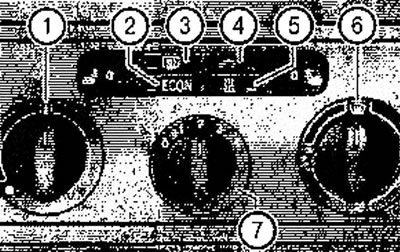
Figure 25. Climate control controls on the front panel:
1. Temperature regulator of supplied air
2. Ecop key
3. Rear window heating switch
4. Interior air recirculation mode switch
5. Parking heater switch
6. Air supply distribution regulator
7. Fan speed controller
The air conditioner only works when the engine is running and the fan is on.
Using the temperature controller (1) (see figure 25), the air flow distribution regulator (6) and the fan speed switch (6) can be used to set the temperature of the supplied air, the location of its supply and the intensity of the air supply.
The activation of the rear window heating and recirculation mode is indicated by yellow indicator lights located in the corresponding keys (2) with the symbol
and (4) with the symbol .
Heating and cooling the air in the cabin
Interior heating mode
Press the key (2) Ecop (Economy mode). This action turns off the air cooling system, the yellow indicator light on the key lights up.
In this case, all actions to heat the interior are carried out in the same way as described in the previous section for cars not equipped with air conditioning.
Cabin air cooling mode
In this mode, the switch (key (2) Eson) is off. The air conditioner is on, and the yellow indicator on the key is not lit.
The handle (1) controls the temperature of the supplied air in both modes.
If the supply air cooling system does not turn on, this may be due to the following reasons:
- the engine is not running;
- the fan is turned off;
- the outside air temperature is below approximately +3°C;
- the air conditioning compressor shut down due to excessively high engine coolant temperature;
- the air conditioning compressor fuse has blown;
- other errors in the vehicle control system. In this case, a complete check of the air conditioning system should be performed.
Air recirculation mode
This mode is enabled and functions in the same way as described above in the previous section. It should be added that if the outside temperature is too high and the air conditioner is on, this mode can also be useful.
If the air distribution control is set to the position that directs the air flow toward the windshield, the recirculation mode is not activated.
Please note: In recirculated air mode, fresh air does not enter the vehicle's interior. This may cause the glass to fog up.
To prevent polluted air from entering the car's interior, there is a filter containing activated carbon. This filter also protects the car's interior from pollen.
Caution! High humidity and outside temperatures can cause significant amounts of condensation to form, which drains through drain pipes to the ground beneath the vehicle. In such conditions, the presence of a puddle under the car is normal.
Visitor comments