



Safety instructions:
There is a risk of accident when lifting a vehicle! Therefore, please read the section "Lifting a car".
Raise the car onto the trestles.
Clean contaminated brake lines.
Caution: Brake pipes are coated with a layer of polyethylene to protect against corrosion. If this layer is damaged, corrosion of the pipes may occur. For this reason, brake pipes must not be cleaned with a wire brush or sandpaper.
Illuminate and check the brake lines from the master brake cylinder to the ABS hydraulic unit and to the wheel brake cylinders with a flashlight. The master brake cylinder is located in the engine compartment under the brake fluid expansion tank.
Brake pipes must not be bent or twisted. They must not show any signs of rust or abrasion. Otherwise, the entire pipe up to the next connector must be replaced.
Brake hoses connect the brake pipes to the wheel brake cylinders located on the moving parts of the car. They are made of a material that can withstand high pressure, but over time they can become porous, swell, or be cut by sharp objects. In all such cases, the brake hoses must be replaced immediately.
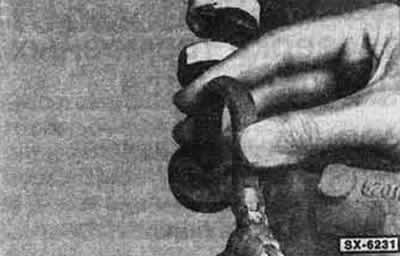
To detect damage, bend the brake hoses by hand in all directions. Brake hoses must not be twisted. If there is one, pay attention to the colored control line!
The connection points of the brake pipes and hoses must not have any traces of protruding brake fluid.
Turn the steering wheel to the right and left until it stops. The brake hoses should not touch any parts of the car in any position.
Lower the car.
Turn the steering wheel again to the right and left until it stops. In this case, the brake hoses should not touch any parts of the car in any position.
Visitor comments