



Volkswagen Polo Classic/Polo Variant
The third generation Polo was produced in Spain with a Classic sedan body and a Polo Variant station wagon in versions for Europe in parallel with the Seat Cordoba twin until 2002, and then the Argentine branch of VW continued production. The model is equipped with 1.4, 1.6 and 1.8 liter petrol engines, as well as 1.9 SD or 1.9 TDI diesel engines with direct injection.
Volkswagen Caddy
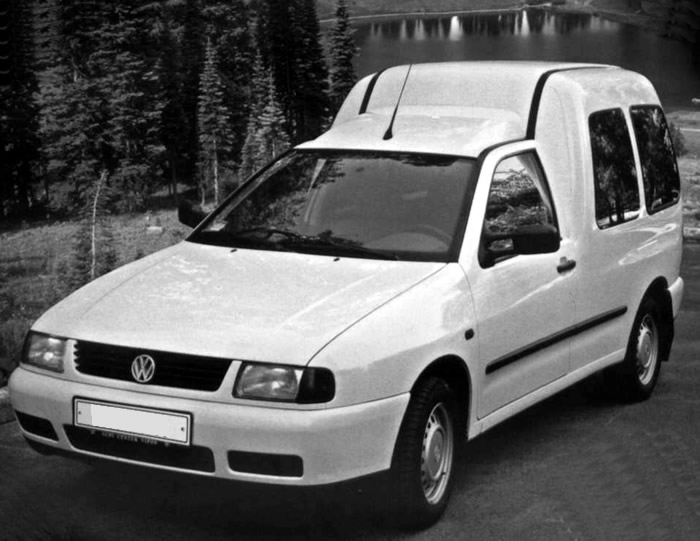
Фургон Volkswagen Caddy
The first Caddy pickup truck appeared in the Yugoslav city of Sarajevo in 1982. It was created using a standard method for that time: they took a production passenger car, extended the base, attached a cargo compartment instead of the rear part of the body, and reinforced the rear suspension. Initially, the Volkswagen Caddy was created exclusively as a delivery van: its interior was absolutely not suitable for transporting passengers. The car was made on the platform of the first-generation Golf model, and in its appearance it borrowed a lot from the Polo. For example, the front part of the body right down to the doors and rear-view mirror.
The model is equipped with a 1.6-liter gasoline carburetor engine with a capacity of 81 hp. The rear suspension is spring, the chassis is reinforced. As an option, a plastic top with or without a lifting rear flap was installed on the pickup. The first generation was produced until 1992.
Then, in 1995, the second Caddy appeared. The design principle was completely preserved: the front part of a compact and cheap B-segment car, an extended wheelbase and a spacious body. Diesel engine, only the most necessary options, because the car had to be affordable. It was in great demand not only in Western Europe, but also here. Small firms, food distributors and other organizations constantly transporting small batches of goods or equipment were very happy with the Caddy.
Production of the second-generation Caddy ceased last year. Now the equipment on which it was made is being dismantled and prepared for shipment to Argentina, where its production will soon resume. Its price, naturally, will be lower than that of the Caddy-3.
In 2000, the passenger van market was undergoing a revolution. The world's auto industry giants introduced new models that were designed not only for cargo transportation, but also for passenger use. Renault released the Kangoo, then came the Opel Combo and Ford Tourneo. Following the trends of the modern market and demand, Volkswagen released a new Caddy on the Golf V chassis.
The New Caddy family is a new generation of technologically advanced vehicles for universal use. The reliability that became the hallmark of the previous generation of Caddy has been continued in the new model.
Visitor comments